
Fall Leaf Cleanup: Why I Prefer to Leave the Leaves

A different approach to autumn cleanup that protects the soil, supports wildlife, and saves unnecessary work and expense.

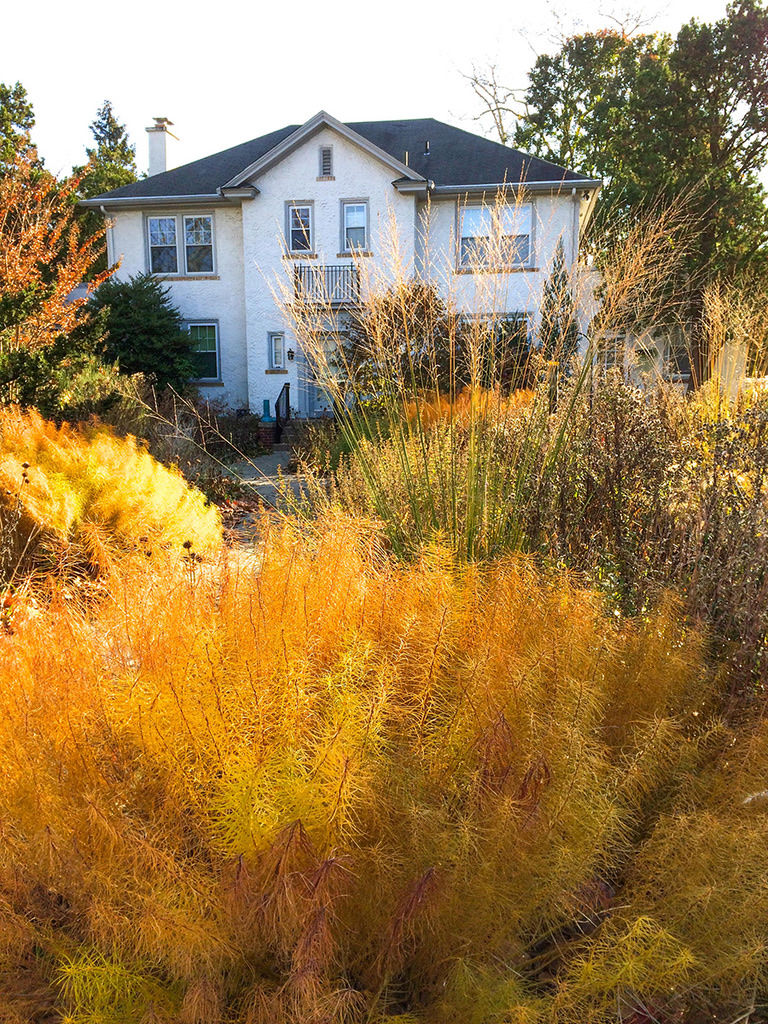
Fallen leaves settle naturally among standing perennials and ornamental grasses, protecting the soil and providing habitat through winter without sacrificing the garden's seasonal beauty.
Every autumn, landscape crews spend countless hours blowing, collecting, and hauling away fallen leaves. Quite often, those same crews return in spring to cover the planting beds with freshly shredded hardwood mulch.
I've never thought that made much sense.
Those leaves contain nutrients that originally came from the soil. They also provide organic matter and habitat for the many organisms that help sustain a healthy garden. Why remove them, only to purchase something else to cover the ground?
In the gardens I design for clients, I take a different approach. Rather than treating fallen leaves as something to get rid of, I consider them a valuable part of the garden's natural cycle.
What I Recommend for My Clients' Gardens
My usual recommendation is simple: rake or blow the leaves from lawns, walkways, and other areas where they aren't wanted into the planting beds, then let them settle naturally.
This is what I do in my own gardens, and it's the approach I encourage clients and their maintenance crews to follow.
Years ago, I used to shred leaves, particularly around main entrances and walkways. I even brought in additional leaves to use as mulch. Eventually, I realized I was creating a lot of extra work without much noticeable benefit.
Now, I generally leave the leaves whole.
In the mature gardens I create, the planting itself provides much of the winter structure. Standing perennials, ornamental grasses, shrubs, and seed heads remain part of the composition long after the flowering season has ended. The fallen leaves settle between them and become another natural layer.
The garden doesn't have to be stripped bare to look cared for.
Nature Has Been Doing This for Millions of Years
Clients sometimes ask why my fall cleanup recommendations differ from the usual routine of blowing everything out of the beds, hauling it away, and replacing it with hardwood mulch.
My answer is fairly simple.
Nature has been doing this for millions of years and managed just fine without our intervention.
Think about what happens in a forest. Every autumn, trees shed their leaves. Those leaves accumulate on the ground, gradually decompose, and return organic material and nutrients to the soil. No one comes along to remove them and replace them with shredded hardwood.
There's an entire living community within that fallen leaf layer, commonly called leaf litter or duff.
Insects and other small organisms use it for shelter, food, and overwintering habitat. Some butterflies and moths spend part of their life cycles among the leaves, while many birds forage through them for insects and other food sources.
When we remove all those leaves, we're removing much more than something that looks untidy.
And shredding isn't necessarily a better solution. Although the finer material may look neater, shredding can also harm the organisms already sheltering within it.
Why I Don't Automatically Replace Hardwood Mulch Every Year
One of my goals when creating a garden is to develop plant communities that become increasingly self-sustaining as they mature.
That includes what happens at ground level.
New gardens often need supplemental mulch during their first year or two while plants establish and begin filling the spaces between them. But as the planting matures, living groundcovers, fallen leaves, and the remains of previous seasons' growth begin providing much of that soil protection naturally.
In many of my established gardens, I no longer recommend annual applications of commercial hardwood mulch.
Most of the plants we grow didn't evolve in beds that receive a new layer of shredded hardwood every spring. They evolved with naturally accumulating and decomposing organic material, living vegetation, and biological activity around their roots.
Hardwood mulch has its place, but continuously adding it without considering how much material is already present can create problems. Excessive accumulation, especially against plant crowns and stems, can contribute to moisture-related stress and shorten plant life.
I'd rather have the plants growing and living longer in conditions that more closely resemble the environments in which they evolved.
There's another benefit for my clients: cost savings.
Why pay every year to have organic material removed from the property, then pay again to have another material brought in and spread around?
A mature garden can produce much of its own mulch, reducing both maintenance costs and the need for imported materials.
A Refined Garden Can Still Have Fallen Leaves
I don't believe ecological gardening needs to look neglected.
Much of my work involves creating gardens that feel natural while remaining composed and intentional. The same thinking applies to how they're maintained.
There are times when leaves need to be moved. Heavy accumulations can smother low-growing evergreens and smaller perennials. Leaves shouldn't be packed against plant crowns or tree trunks, and walkways, drains, and other functional areas should be kept clear.
Sometimes that means redistributing leaves from one part of the garden to another.
I make these decisions by observing the plants, their growth habits, and the overall composition. It's something I've learned to judge over many years of working directly with gardens.
And when there's an established planting community with strong winter structure, a natural leaf layer often looks perfectly appropriate.
We don't need to make every planting bed look as though autumn never happened.
In Practice: A More Thoughtful Fall Leaf Cleanup
For homeowners and maintenance crews caring for nature-inspired gardens, here's what I generally recommend:
Rake or blow leaves from lawns, walkways, patios, and other areas where they aren't wanted into nearby planting beds.
Leave most fallen leaves whole, allowing them to settle naturally between plants.
Redistribute excessive accumulations so smaller plants and low-growing evergreens aren't smothered.
Keep leaves away from drainage openings and avoid heavy piles against tree trunks, plant crowns, and structures.
Leave standing perennials, ornamental grasses, and seed heads in place for winter structure and wildlife habitat.
Avoid unnecessary annual applications of hardwood mulch where the garden is already providing its own protective organic layer.
The goal isn't to eliminate maintenance. It's to make better decisions about what actually needs to be done.
The Bottom Line
A healthy, beautiful garden doesn't require us to remove everything that nature produces.
Fallen leaves protect the soil, return organic matter, support wildlife, and help create the conditions for long-lived plant communities.
For my clients, this approach can also mean less maintenance and lower annual costs, while allowing their gardens to become richer and more self-sustaining over time.
Sometimes good garden stewardship is simply knowing what to leave alone.
And in autumn, that often means leaving the leaves.
Continue Exploring
Understanding how a garden uses its own organic material is part of creating a landscape that becomes healthier and more beautiful with time.
Read next: Fall Cleanup and Winter Prep
Learn more: Winter and Spring Cleanup
Download the guide: How to Read a Nature-Inspired Garden
Considering a Garden or Landscape Project?
A well-designed garden should do more than look beautiful. It should develop into a living community of plants that supports healthy soil, local wildlife, and four-season interest while becoming increasingly self-sustaining.
If you're considering a nature-inspired garden or landscape, begin with a brief conversation about your property, goals, and what may be possible.
Stephen Coan
NJHIC# 13VH08688500
About the Author
Stephen Coan is an award-winning garden and landscape designer and horticulturist behind Stephen Coan Garden Design, creating plant-forward, nature-inspired landscapes with quietly integrated hardscaping across Southern New Jersey, Philadelphia, the Main Line, and the Delaware Valley.
Service Area: Southern New Jersey • Philadelphia • Main Line • Delaware Valley • Greater Tri-State Region
Select destination projects accepted nationwide by invitation.


Comments