
Habitat Gardens Without the “Wild” Look
Field Notes by Stephen Coan
Pollinator-rich, ecologically intelligent planting that still reads as refined, intentional, and elegant.
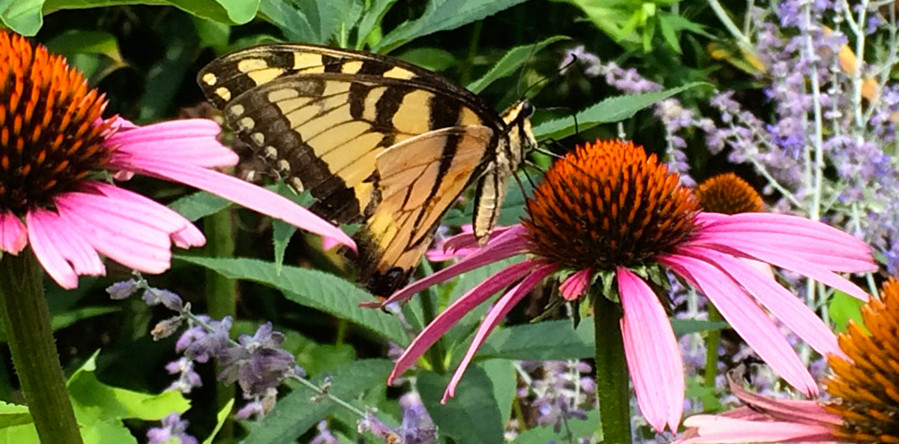
Habitat Is Not a Style
Habitat is often treated as a visual style, as if ecological value requires a particular look. That misconception has done real damage to the idea of habitat gardens because it suggests a false trade: either you support life, or you have a garden that looks refined. In reality, the most successful habitat gardens are often the most composed. They invite pollinators and birds while still reading as intentional, elegant, and appropriate to the architecture of the home.
What Makes a Garden Habitat
A garden becomes habitat when it offers something consistent and reliable: nectar and pollen across seasons, host plants for life cycles, shelter, water, and a structure that supports beneficial insects and birds. Those outcomes are ecological, not aesthetic.
A habitat garden can be clean-lined or soft-edged. It can be contemporary or traditional. What matters is how the planting functions and how it is stewarded over time. The elegance comes from design discipline, not from avoiding ecological intelligence
Refinement Begins With a Frame
Refinement begins with clarity. A crisp boundary makes the garden feel cared for. It can be a stone edge, a clean cut line, a path, a band of gravel, or a simple transition between materials.
The boundary does not need to be loud. It needs to be intentional. Once the garden has a clear frame, the planting can be rich without feeling messy.
A Composed Habitat Garden Needs Hierarchy
A refined habitat garden requires hierarchy. Not every plant can be the star.
Strong structural plants create the backbone: shrubs with good form, grasses that hold silhouette, perennials that repeat and anchor the eye. Once the structure is established, diversity can be woven in as seasonal detail. This is where the garden becomes alive.
The key is that diversity should feel like texture, not noise. A composed habitat garden rewards attention without demanding it.
Ecological Planting Still Requires Curation
Habitat value is not an excuse for poor form, constant flopping, or uncontrolled self-seeding.
There are native and near-native plants that are upright, architectural, and elegant. There are also plants that are ecologically useful but visually chaotic in residential settings. Selecting the right performers is part of the craft. So is placing them where they can thrive without becoming invasive in spirit, even if they are not invasive by definition.
Winter Structure Is Part of the Design
A refined habitat garden holds through winter. This is where many “wild” gardens fail visually, because they were designed for bloom season only.
When winter structure is planned, the garden reads as intentional year-round. Seedheads, stems, grasses, and woody form carry the architecture. The habitat benefit continues as well, because winter structure supports birds and overwintering insects. Elegance and ecology are not opponents here. They are aligned.
In Summary
A habitat garden does not need to announce itself as habitat. It simply needs to perform as one, quietly, consistently, and beautifully.
When the structure is clear and the planting is composed with restraint, the garden supports life and still feels refined. It can be pollinator-rich without looking untamed. That is not compromise. That is good design.
Next Step
If you want a garden that supports pollinators and birds without sacrificing a refined, intentional look, start with a brief application so I can understand your site, your goals, and the level of stewardship you want.