
Native Bee Habitat:
Nesting, Overwintering, Stewardship
Field Notes by Stephen Coan
A pollinator garden is not just flowers. Native bees need places to nest, safe sites to overwinter, and a landscape managed with restraint so habitat isn’t erased by “tidying.” This note explains how I build native bee habitat into refined, plant-forward gardens, what stewardship looks like across the seasons, and how small decisions create outsized ecological value in the Philly tri-state.
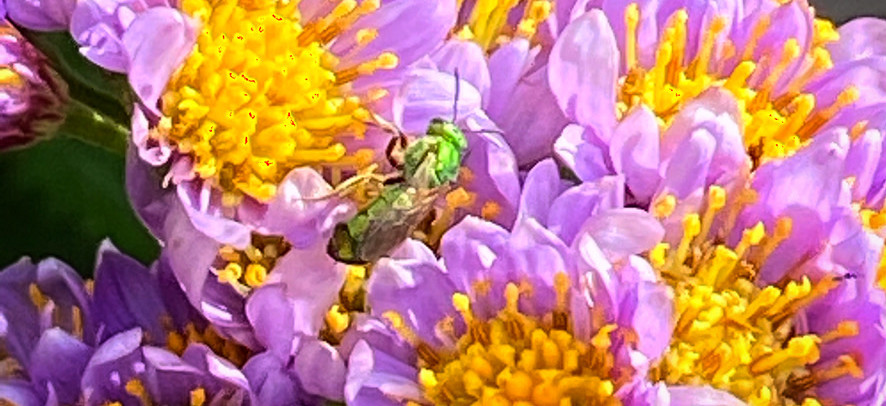
Native Bees and the Habitat Most Gardens Forget
Most native bees nest in one of two ways:
Ground nesting
Many species nest in well-drained soil, often in sunny, lightly vegetated areas. They prefer places that are not constantly mulched, not constantly irrigated, and not compacted by repeated foot traffic.
In design terms, that can look like:
-
sun-warmed bed edges and gentle slopes
-
well-drained soil zones that aren’t sealed under fabric and mulch
-
quiet “no disturbance” areas that remain stable year to year
Cavity nesting
Other species nest in hollow stems, pithy stems, crevices, or existing small cavities.
In design terms, that can look like:
-
preserving select standing stems through winter
-
leaving some structural material in place rather than stripping everything down
-
incorporating discreet habitat elements where appropriate, without turning the garden into a gadget display
A key point: nesting is fragile. If the garden is disturbed at the wrong time, habitat disappears, even if flowers remain.
Nesting: where native bees actually live
Most native bees nest in one of two ways:
Ground nesting
Many species nest in well-drained soil, often in sunny, lightly vegetated areas. They prefer places that are not constantly mulched, not constantly irrigated, and not compacted by repeated foot traffic.
In design terms, that can look like:
-
sun-warmed bed edges and gentle slopes
-
well-drained soil zones that aren’t sealed under fabric and mulch
-
quiet “no disturbance” areas that remain stable year to year
Cavity nesting
Other species nest in hollow stems, pithy stems, crevices, or existing small cavities.
In design terms, that can look like:
-
preserving select standing stems through winter
-
leaving some structural material in place rather than stripping everything down
-
incorporating discreet habitat elements where appropriate, without turning the garden into a gadget display
A key point: nesting is fragile. If the garden is disturbed at the wrong time, habitat disappears, even if flowers remain.
Overwintering: the season that determines next year
Overwintering is where many well-intentioned gardens fail. Bees overwinter as adults, larvae, or pupae in protected places: stems, leaf litter, soil, and sheltered corners of the garden.
The most common mistake is the urge to “clean everything” in fall or at the first warm days of spring. When you remove stems, rake every leaf, and cut everything to the ground, you often remove the next generation of pollinators along with the debris.
A plant-forward garden needs winter structure anyway. The same restraint that creates four-season legibility also supports overwintering habitat.
Stewardship: how to manage a garden without erasing habitat
Stewardship is where design becomes a living practice. It is also where a refined habitat garden distinguishes itself from a neglected one.
A habitat-supporting stewardship approach includes:
-
delaying major spring cleanup until the garden truly wakes and conditions stabilize
-
cutting back selectively rather than shaving everything down
-
leaving a portion of stems standing through winter, then reducing them in phases
-
allowing leaf litter to remain in some zones, especially under shrubs and in protected beds
-
avoiding compaction and disturbance in nesting areas
This is not “letting it go.” It is edited restraint.
The clean way to build habitat into a refined garden
A common fear is that “habitat” means messy. In reality, the difference between refined habitat and chaos is structure.
Habitat gardens that still read as intentional usually have:
-
clear edges and thresholds
-
defined paths and circulation
-
planting density that looks composed
-
seasonal editing that preserves structure and removes only what truly detracts
In other words, the garden reads designed, and the habitat value is quietly embedded.
Why late-season flowers matter so much
Late-season bloom supports pollinators as they prepare for dormancy and helps maintain food resources when many landscapes go empty.
This is one reason I design for four-season legibility. The garden does not peak and collapse. It carries through. That continuity supports both aesthetics and ecology.
In Practice
A simple rule for native bee habitat
Plant for a long season of bloom, preserve nesting and overwintering structure, and manage with restraint. A few “untouched” decisions, repeated consistently, will do more than any single pollinator product.
The bottom line
Native bee habitat is not a feature you add. It is a relationship you support.
When nesting sites, overwintering structure, and stewardship are designed into the landscape, the garden becomes more alive each year. The planting matures, the ecology deepens, and the space feels not only beautiful, but inhabited.
Begin the Conversation
Begin with a brief phone conversation to explore your goals and property. When we’re aligned, an on-site consultation is scheduled and the most appropriate path forward is defined.