
The Quiet Architecture Behind Great Planting
Field Notes by Stephen Coan
The unseen structure that holds the garden together, so the planting can take the lead.
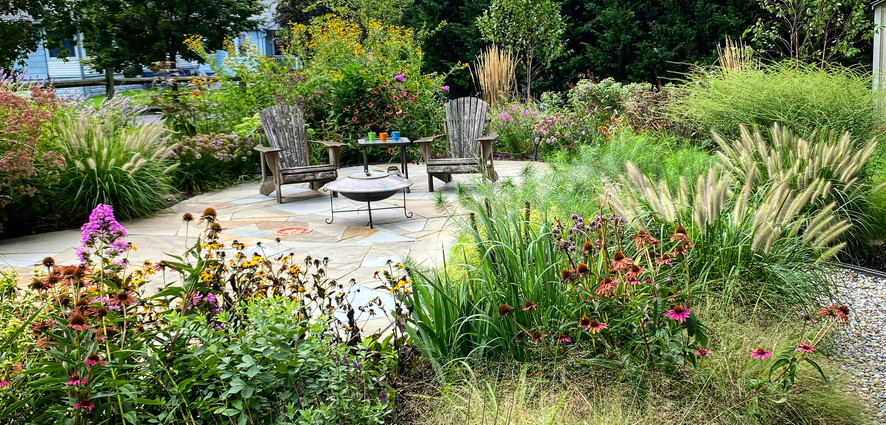
Why Great Planting Needs Structure
People often credit great gardens to great plants. It is understandable, because plants are what you notice first. But the gardens that feel effortless, coherent, and high-end are rarely held together by plants alone.
They are supported by quiet architecture: the subtle framework that gives planting clarity, protects it over time, and makes the landscape function as a composed place rather than a decorated yard.
Edges Are Discipline
Quiet architecture is not about dominating hardscape. It is about precise decisions that shape experience.
It often begins with the edges. A clean edge is a form of discipline. It tells the eye the garden is intentional, even when the planting is naturalistic and layered. It also makes maintenance simpler and less disruptive. In a composed landscape, the edge is doing more work than people realize.
Grade and Water Are Structure
Grade and water are part of this architecture as well. A garden cannot be beautiful if it is fighting the site.
Water either feeds the landscape or undermines it. When drainage is handled quietly, the garden improves. Plants root deeper. Soil structure becomes healthier. Areas that once struggled begin to thrive.
The best drainage solutions do not announce themselves as engineering. They read as landscape: a subtle swale, a discreet stone runnel, an infiltration planting, a rain garden that feels like a natural depression rather than a “feature.” When it works, it disappears into the larger composition.
Circulation Frames the Experience
Circulation is another form of quiet structure. Paths are not only for movement, they are for framing.
They decide what is revealed and what is concealed. They create moments of pause. They choreograph approach. In a plant-forward landscape, circulation also protects the planting. Without clear movement lines, gardens are gradually trampled by desire paths and eroded by use. A path, properly placed and proportioned, is one of the most generous things you can do for a garden.
Proportion Holds the Calm
Proportion is the final quiet architect.
A landscape can have excellent materials and still feel wrong if the scale is off. A wall is not only a wall, it is a line in the composition. A terrace is not only a terrace, it is the stage that the garden surrounds.
When these elements are held with restraint, planting can be abundant without feeling uncontrolled. When they compete, the garden loses its calm.
What This Looks Like in Practice
Quiet architecture is easiest to understand when you see how it shows up in real decisions.
-
A controlled edge that makes naturalistic planting read as intentional, not messy
-
A subtle grade transition or drainage move that fixes wet areas without turning the garden into a visible “solution”
-
A path placed with purpose that protects planting and creates a sequence of reveal, pause, and arrival
-
A terrace sized correctly so it feels generous without overpowering the garden
-
Thresholds and transitions that make movement feel effortless and the landscape feel coherent
In Summary
This is why truly plant-forward work is never “plants first” in a simplistic way. It is planting supported by structure.
Hardscape is quietly integrated so the planting reads as the primary experience. When done correctly, clients often describe the result as effortless, even though nothing about it was casual. Effortlessness is a sign of resolved decisions.
Great gardens are not built by adding more. They are built by clarifying what matters. Quiet architecture clarifies the garden, and then the planting can take the lead.
Next Step
If you want planting that feels abundant but calm, supported by structure that disappears into the experience, start with a brief application.